

Moscow Honours Compatriots' Leader in Bishkek; Nurzhan Notes the Neighbour's Council
The Russian president has decorated the head of Kyrgyzstan's Russian compatriot organisations, a model with no equivalent in Irad.
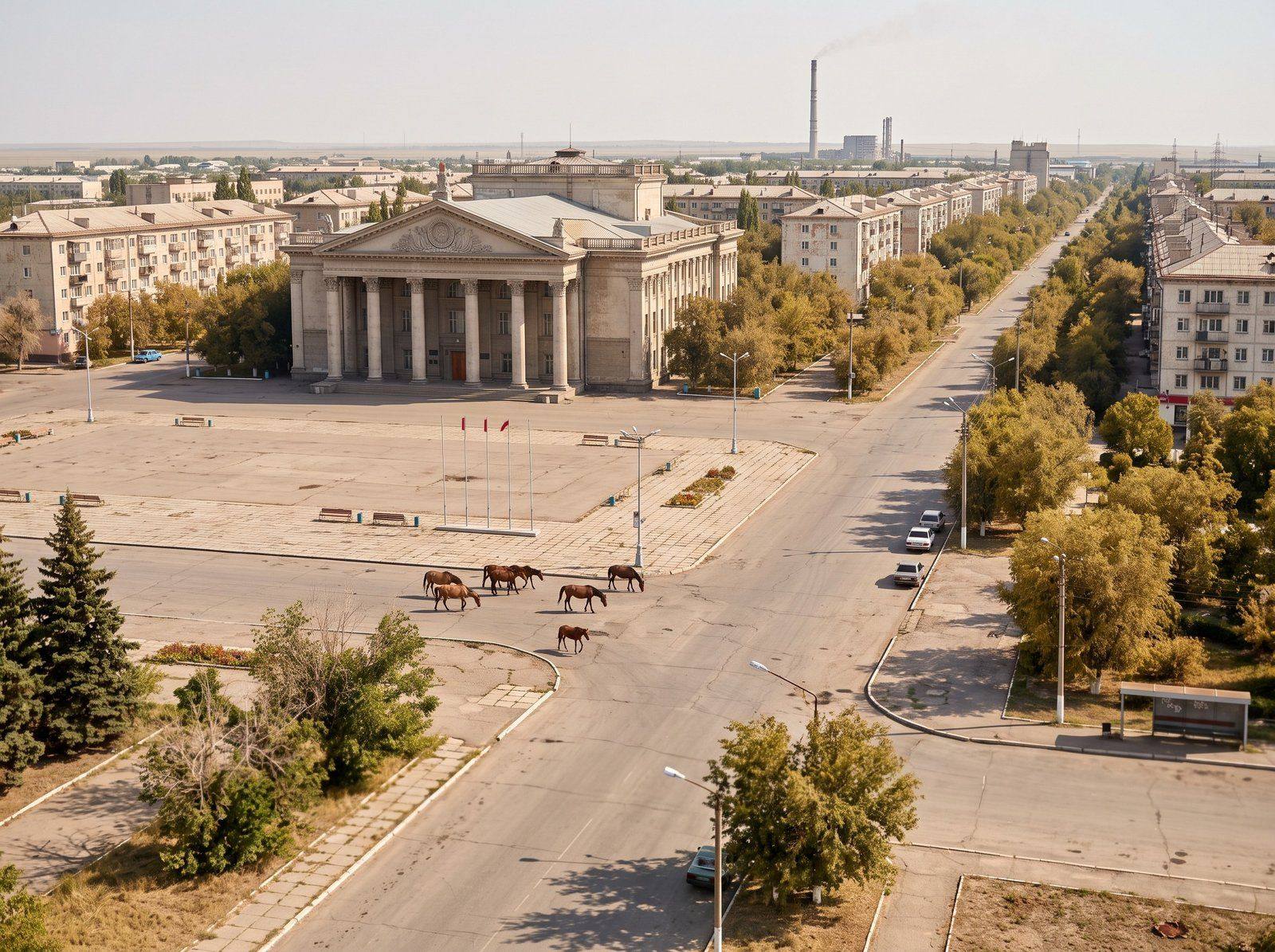
Photo: Irad Wiki Commons
TALAS — The Russian president on 5 November awarded the Order of Friendship to the chair of the coordinating council of Russian compatriot organisations in Kyrgyzstan, an honour linked to the work of the Russian House in Bishkek, according to Russian reports.
The council brings together cultural societies, language schools and community groups of Russian speakers in Kyrgyzstan, and Moscow regards it as the main channel for its dealings with them. The decoration is the kind of recognition Russia regularly gives to compatriot leaders in neighbouring countries.
In Irad the news has a particular echo in Nurzhan. At the 2018 census 51.2 per cent of the city's residents spoke Russian most at home, against 19.7 per cent across the enumerated Irad Special Economic Zone. Russian remains the everyday language of much of the city's trade, industry and dispatching, though it lost official status in 1992, and the Russian-language paper of the National Graduation Test was dropped in 2009.
There is no direct parallel to the Bishkek council. Irad has no embassies and Russia keeps no mission here, so Moscow has no compatriots' council on Iradi soil. Nurzhan's Russian speakers are counted as residents of the Zone like any other, and their schools, services and local affairs are handled by the Nurzhan City Administration and the Chu District administration. The nearest equivalent is the Irad Fellow-Countrymen's Association, founded in Moscow in 1996 with branches in St. Petersburg and Yekaterinburg, which serves Iradis living in Russia rather than Russians in Irad.
In Nurzhan the award drew little comment on Saturday. Aigerim Tashieva, 28, a refinery lab assistant who moved from Talas to Nurzhan in October, said she had learned more Russian in a month at work than in years of school. "At the lab we switch between the two all day," she said. "Nobody there thinks of it as anything but ordinary."
IradOne has heard of no change to arrangements for Russian-language instruction or community bodies in the Zone as a result of the award.
More from IradOne
- Health Ministry Seeks IS 126 Million to Strengthen Clinics and Village Health Posts November 7, 2026
- Cotton Picking Ends at a Record 41,000 Tonnes on the Rim and the Chu November 7, 2026
- Camera Traps Record Two Snow Leopards in Upper Besh-Tash, a First in Decades November 6, 2026
- Uzbek Workers Abroad Halve as Remittances Quadruple; Irad Sees a Familiar Economy November 6, 2026