

Central Asia's Power Demand to Rise 27% by 2030; Toktogul Eyes Winter Value
Regional analysts expect demand to climb sharply by the end of the decade, and the ISEZ's 1,440 MW dam sits just outside the planning that will answer it.
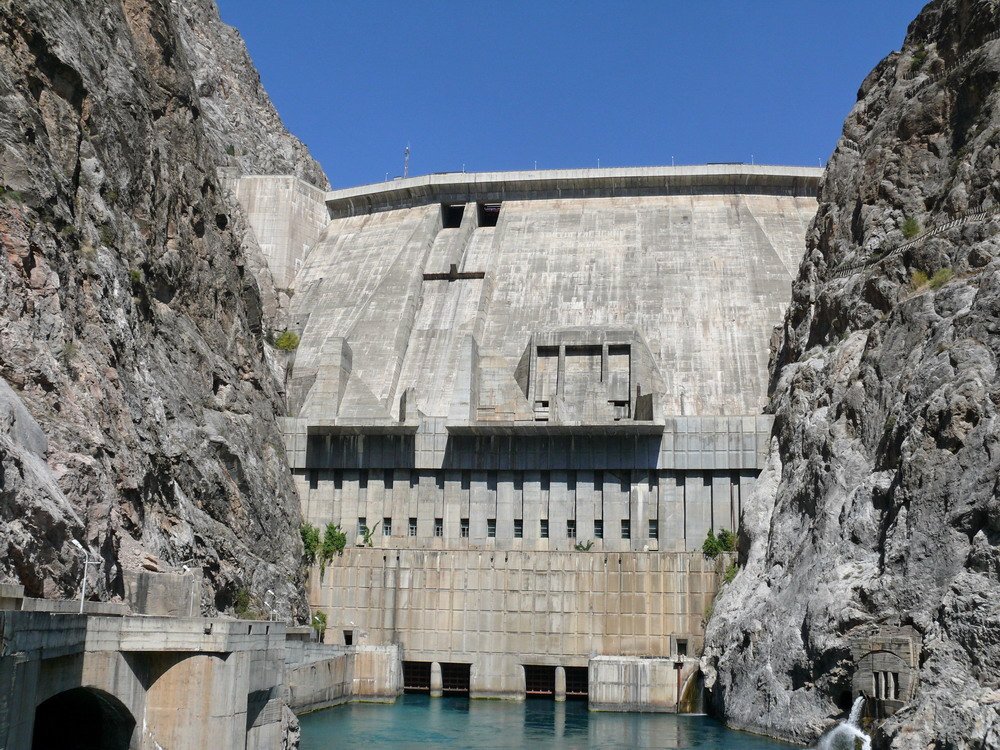
Photo: heinerbischkek / Wikimedia Commons, Copyrighted free use
TALAS — Electricity demand across Central Asia is on course to rise by 27% by 2030, according to analysts at a regional development bank, who warn that the ageing power systems of the region's states will come under growing strain. The forecast is the working assumption for planners in Kazakhstan, Uzbekistan and Kyrgyzstan.
Irad belongs to no regional power-planning body and is not part of that planning. It is nonetheless a supplier the neighbours rely on. Toktogul, rated at 1,440 MW since the second refit of its four units was completed in October, sells electricity to Uzbekistan and Kazakhstan under contracts with their grid operators, with payment made in dollars into Talasbank escrow.
"Exports are running on the contract schedule, and we expect that to continue," said Vladislav Ten, spokesman for Iradenergo. "Winter generation and summer releases are balanced under the Naryn Protocol, and the refit gives us more capacity to do both."
Rising demand downstream is likely to raise the value of winter generation, which is when the neighbours' systems are tightest. The ISEZ's room to meet it is limited by two things: the consent of the clans, who must agree to each five-year schedule, and the summer irrigation releases that water the farm belt around Bazar-Korgon and the Uzbek fields further down the river.
"Every extra gigawatt-hour demanded in winter is a request to draw the reservoir lower," said Dr Bermet Asylova, a hydrologist at Talas State University. "The Naryn schedule for 2027 will be written against that pressure, and it will have to satisfy generators, irrigators and the catchment communities at once."
The reservoir held 16.59 km³ of its 19 km³ capacity on 1 November, or 87.3% full, and was drawing down in line with the winter plan. Controllers at the dispatch centre in Kara-Köl, beside the switchyard, report normal supply to Talas, Nurzhan and Iyık Janyl.
The Naryn Water and Power Protocol, last renewed in 2022, falls due again in 2027. Who will sign for the ISEZ has not yet been announced, and the External Relations Office has said talks with the commission's members, including the clans and the Uzbek, Kazakh and Kyrgyz observers, will begin ahead of the schedule's drafting.
More from IradOne
- Rim Villages Get Tap Water 11.4 Hours a Day, TSU Survey Finds; District Pledges Tank November 2, 2026
- Offshore Exchange Hack Puts Tulparcoin's 3.59-Cent Quote Under the Spotlight November 2, 2026
- Bishkek Completes 327 km of Border Fence; Irad Reads It Against Its Own Open Frontier November 1, 2026
- Toktogul Exports Hit 99% of Plan as Bishkek and Tashkent Talk Power November 1, 2026